拂去时光尘埃:从“龙人”之名到文明源起(4)
当来自远古东方的生命低语穿越时空抵达耳畔,它邀请我们以更谦卑的姿态理解人类在自然中的位置,对所有曾经存在过的智慧生命报以深沉敬意,并以此为基础,迈出走向未来的坚实步伐。
撰稿人:何博媛
Brushing Off the Dust of Time: From the Name "Homo longi" to the Origins of Civilization
Editor's Note: As scientists brush the dust from Homo longi skull fossil, we are not only witnessing a scientific breakthrough that rewrites the history of human evolution, but also a profound encounter with the ancient East. This ancient discovery pushes the geographical stage of Chinese civilization to a deeper historical dimension: for the hundreds of thousands of years before the appearance of writing, bronze, and city-states, this land was already the setting for a magnificent epic of intelligent life. Although Homo longi is not the direct creator of Chinese civilization, its existence profoundly impacts how we understand the origin and continuity of civilization. This dialogue across time not only concerns "who we are" but also how we comprehend this Eastern land that has carried countless life experiments.
On September 26, 2025, Beijing time, the internationally renowned academic journal Science published a landmark study completed by a multi-institutional team in China. Through high-precision CT reconstruction and geometric morphometric (GMM) analysis, researchers discovered that the Yunxian Man skull shares features such as a flat face, supraorbital torus, and cranial capacity with the Heilongjiang Homo longi skull, while being significantly different from Homo erectus. The study thus suggests that the "Yunxian Man" skull, previously considered Homo erectus, is actually an early representative of the "Homo longi" (Homo longi) lineage, which is closely related to the mysterious ancient human, the Denisovans. This conclusion not only significantly pushes back the divergence time of the modern human, Neanderthal, and Homo longi lineages, but also, beyond the scientific dimension, opens a new window for us to look back at the ancient history of the East.

推荐阅读
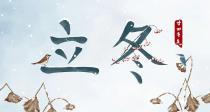
百年难遇“早立冬”来了!有啥讲究?早看早准备!
今日,我们迎来立冬节气,冬季自此开始。立,建始也;冬,终也,万物收藏也。立冬,意味着生气开始闭蓄,万物进入休养、收藏状态。其气候也由秋季少雨干燥向阴雨寒冻的冬季气候过渡。

百年一遇“晚重阳”上线!这些玄机你知道吗?
今天是重阳节,又称重九节、茱萸节、登高节、敬老节,是我国庆祝丰收、祈福长寿,表达对老人尊敬与爱护的节日,时间在每年的农历九月初九。
三星堆公布重大发现!专家:种种迹象表明,三星堆可能爆发过内战,神权贵族集团受到严重打击,城市水系也因此改变
今天,四川省文物考古研究院发布了三星堆遗址多学科研究最新成果。
纪录片《左宗棠收复新疆》被赞“破冰”,以真实历史打动观众
全面展现左宗棠收复新疆全过程,重现重大历史事件全貌,8月28日,纪录片《左宗棠收复新疆》研讨会在京举行。

119.66亿元!2025年暑期档红火收官
根据国家电影局统计,2025年暑期档电影总票房为119.66亿元,观影人次为3.21亿,同比分别增长2.76%和12.75%,国产影片票房占比为76.21%。
国家大剧院原创民族歌剧《红高粱》9月首演 中国风歌剧新样本诠释民族血性
2025年是中国人民抗日战争暨世界反法西斯战争胜利80周年,9月27日至10月3日,国家大剧院原创民族歌剧《红高粱》将迎来世界首演。

乾隆帝的“大玩具箱”首次展出!这场大展探究中国造物如何慕“古”求“新”
从211件故宫珍藏文物中,探究清代宫廷设计师们如何慕“古”求“新”。7月4日,“达古今之宜——清代宫廷设计潮流展”在嘉德艺术中心开幕。

小暑来了,入伏还远吗?7月20日入伏,共30天!
古人说,“暑,热如煮物也”。小暑时节天气变化,就是由“烤”到“蒸”的转变。一般入伏正好是在小暑期间。今年7月20日入伏,持续30天。

陕历博推出“吉金·中国”展 从青铜器中读懂早期中国
陕西省西安市临潼区姜寨遗址出土的黄铜片。陕西历史博物馆供图作为礼乐器的西周编钟和东周编磬。李志强摄河南郑州商城遗址出土的商代兽面乳钉纹铜鼎。









 京公网安备 11011202003835号